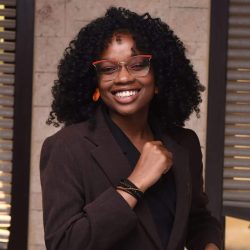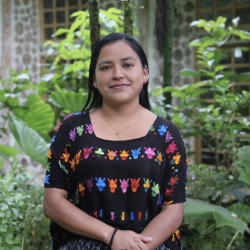

This oral history interview with Fatou Ndoye took place on April 27, 2023, and was conducted by Peg Spitzer and Ayuska Motha with French-to-English translations provided by Anne Barre and Sarah Jourdain. It lasted 40 minutes.
Have you observed the impact of climate change in your community? If so, when did you first notice this and how have these changes evolved over time? Also, could you speculate on what the future impacts might be?
I really started working in the Saloum Delta around 2003 or 2004. In this locality, we were more focused on questions of economic development and less on those of the climate. Our objective was to see—in collaboration with the UIFA (University Institute of Fisheries and Aquaculture)—how to strengthen shellfish collection practices by integrating bioecological monitoring. The other activities concerned the development of forest resources to enable women to have income during periods of biological rest.
This project ended due to a lack of funding. In 2014, when I returned to the Saloum Delta region with the support of an NGO project “The World According to Women” (LMSF), I was genuinely surprised at the impacts of climate change. The coconut palms that had lined the sea were on the ground, houses were flattened, the road leading to the pier was so narrow that I wondered if a vehicle would ever be able to reach its destination. In addition, women in the community had to borrow canoes to search for shells far out in the ocean as they walked to the edge of the shore to fill their basin with products. This is how I truly understood how climate change was ravaging this island area.
How did you initially become involved in this work? That is, what was your inspiration?
My mother was a major influence. It’s really a personal story of my family living in very modest conditions with modest revenues, and my mother always fighting for her daughters, to make sure that we got an education, and that the family would be well fed and live a good life.
It was through my mother that I could see and experience the stories (and lives) of so many women in Senegal and that’s what fascinated and motivated me to do this work. I remember my mother working “in solidarity” with many poor women. She even went into debt to use her merchandise to help other women who couldn’t afford to buy fish or vegetables. Because the fishing sector is extremely important for Senegal’s economy, that “reality” inspired me to focus on the Saloum Delta: The whole initiative for which I received the Gender Just Climate Solutions award was working with women in the fishing sector in the Saloum Delta. That award enabled me to grow this sector with women using environmentally friendly technologies. Incidentally, my mother sold fish in the local marketplace.
What did you do before you became involved in this work? What is your educational background? And how did you come to work with the same community as her mother?
I was born and grew up in Dakar. My family belongs to the Lebou ethnic group who traditionally are fishermen (although my father did not do this type of work). The Lebou women are known to be very hard workers and savvy negotiators: In fact, they were also the founders of the city of Dakar. In this city, women don’t want to depend on anybody and vigorously support democratic values and cooperative engagement.
Thanks to the support of my mother and my family, I was able to go to university, which was quite rare for women in Senegal thirty years ago in the early 1990s and before.
When and where did you go to university?
I started university in 1988, a period that coincided with the White Year, an invalid year. This is where I started my steps to continue my studies in France. I had several universities that accepted me, including Lyon II, Grenoble II and the University of Montpellier. I finally chose Grenoble II in Saint Martin d’Hères.
This is where the real obstacle course began. I had no possibility of financing. But with my father, we activated the relational network. My father contacted his nephew who was the pilot of the presidential plane and who agreed to take me to Paris. At the embassy, we had to justify a return ticket, so we contacted a half-brother who paid me for the return ticket that we were then to give him as soon as I arrived in Paris. The other equation to solve was pocket money. Finally, a maternal cousin gave me 150,000 FCFA (about 228 euros) as a loan to repay later. This is how I embarked for France and started a new stage in my life.
I studied sociology at Grenoble; and continued my studies to become licensed as a DEA (Diplôme d’Etudes Approfondies)—which is an advanced degree, something between a master’s degree and a PhD. I started to write my doctoral thesis but switched direction and began a DESS (Diplôme Etudes Supérieures Spécialisées) in Food Politics in Paris. Then, I worked in the field of food sovereignty/security.
Can you explain a little more about your career trajectory?
After my DESS, a French NGO GRET (Technological Exchange Groups) recruited me as an intern for a project in Dakar in collaboration with Enda Graf Sahel. I began researching the possibilities for introducing local cereals in popular restaurants in Dakar.
It was at the end of that research project that Enda Graf Sahel asked me to work on two EU (European Union) projects. The first project originated in West Africa, ALISA (the Food, Innovation and Food Know-How in West Africa). Its purpose was to study the food styles of the people of Dakar to identify innovations and know-how relating to fish processing practices on the coast.
In the second project—the European Union’s PPCL (Program for the Promotion of Local Cereal)—I worked with women vendors who cater and sell couscous and flour on the street. It was at the end of this project that I started to focus on women’s organizational steps: from individual structures to GIE (Economic Interest Groupings), to cooperatives, to federation networks, and, finally, to territorial platforms to better strengthen the value chains in the same territory.
In this work, I began as the Sociologist-in-Charge of the artisanal sector and then became coordinator of the VPL (Department for the Valorization of Local Products), which later became the SADA Pole (Alternative and Sustainable Food Systems). Now, I continue my work and I have two grown children.
Aside from family, did you have any other mentors or supporters who helped her along the way?
Well, I received the support especially from my uncle who is based in Geneva, who supported me a lot during my studies. I also had the support of a brother who is in Paris, he supported me a lot to ensure my studies because I stayed with him.
Otherwise, well, I think that’s it, but I mean, one of the supports that I also have is my own support: When I was a student, people would ask me “Are a student or are you an immigrant worker?” because I spent all my time working to support myself and especially to send money to my parents, so there you go, being a student—I was already a worker.
I am very hard working, and I have a strong personality. I knew that I had to rely on myself.
Were there any strong personalities that influenced you, who might have served as role models?
Beyond my mother’s influence, there were also the other aunts who were around me, especially the paternal aunts with whom I lived, who set the example, in terms of advice, etc., so they supported me. Beyond that too, during my professional certificate, I met people, especially women, who inspired me a lot. I want to talk for example about a lady who supports me, who supported me when I had just arrived at ENDA, with the programs I had just started. There is one called Genevieve Andre Ryckmans, who was a Belgian parliamentarian and with whom we developed relations. I saw her, how she fought, and I said to myself, ‘fine, if she can do it, why not me?’ She told me about her journey, in the end she influenced me a lot.”
Ryckmans later introduced me to Sophie Charlier who leads the association, The World According to Women (Présentation – Le Monde selon les femmes). Sophie supported my work a lot and collaborated with me often. They had the same points of view. I also continued to read testimonials and works on feminism, toxic masculinities, and gender equity.
Can you tell us more about your collaboration with Sophie Charlier?
It started in 2008, when the André Ryckmans Foundation transferred these projects to the NGO, LMSF. The collaboration began with a project at Pointe Sarène in the Petite Côte. A project that was to improve the processing techniques of cymbium, highly prized marine gastropod mollusks, which gives a specific taste to “ceebu jën,” a national dish that originated in the fishing communities on the Island of Saint-Louis in Senegal. I got on very well with Sophie when she visited Senegal for the first time as part of the follow-up to this project, and our relationship really took off during this period.
I began my collaboration with LMSF in 2008 and have continued this even in the present day—for fifteen years! Professionally, I found Sophie very methodical and educational. This refers to her career as a University Professor at Louvain la Neuve.
What struck me the most was her human dimension. We have relationships that go beyond the professional framework. I saw in her a person very attached to her family. She developed close bonds with her sisters with whom I had the opportunity to rub shoulders during my stays in Brussels.
How can the Gender Just Climate Solutions (GJCS) jury members and others in the global north support your work?
Yes, I worked to identify the challenges women face in the fishing industry. In the Saloum Delta, for example, some women still must burn wood to prepare the fish for selling and they do this sometimes in unsanitary conditions. That’s why, with the GJCS award money, we bought some improved cookstoves, which helped reduce the amount of wood required. We recognized that solar equipment would be even better.
With the funding, some women purchased a solar grinder and another group of women who worked in a sort of “cooperative” focused on transforming fishing products (especially shellfish). Before they got a solar freezer, there was a lot of fish wasted. Installing a solar freezer provided enormous potential.
[Note: Anne mentioned that there is enormous potential in improving not only the carbon footprint of those companies but also revenue by increasing the quality of the products].
The working conditions are better, and the women are happy with the equipment. We think we should focus on large dissemination of such equipment and maybe even local production or local assembly and, for that to happen—we need to document this with data collection; so maybe donations or any other support could be put towards making that happen. It’s a very long and difficult process but we have identified some great digital tools that you just put on your mobile phone. All the women have mobile phones and so they could just input their daily revenue—or all the data that needs to be collected—just by accessing a platform on their mobile phone.
In what ways do you keep up with the women in the Saloum Delta?
I travel to the Saloum Delta as part of my work for Enda Graf Sahel; and that, in addition, I traveled to several countries in Africa, Europe, and Asia. I like diversity, so I like traveling outside Senegal as much as in the Saloum Delta.
What is the most critical data that needs to be collected in the Saloum Delta?
As part of our work, we have a huge data deficit. How can we improve public policies if we do not have reliable data? This is one of the reasons we carry out a lot of studies to have specific data on the contribution of women and to organize pleas for the improvement of their conditions in the various sectors of activity. Also at the grassroots level, if I take the example of the women we support, many of them do not register their income, or their profits, so it is difficult to monitor their activities. This is why it is necessary to set up digital platforms that allow data to be recorded daily. For the costs, it will be necessary to equip the women with adapted smartphones, organize training sessions, and ensure the operation of the platform.
ADDITIONAL INFORMATION:

An employee, Khadija, working with cereal products

Fatou Ndoye and her colleague at Enda Graf Sahel, Fatoumata Fall, examine the new freezer.


Shrimp packing for the freezer

Fatou with Saloum Delta women with the old grinders

Solar Mill visit WECF coordinator, Anne Barre